

Movable restaurant furniture—lightweight, stackable chairs and foldable or modular tables—allows venues to reconfigure their dining room layout in minutes rather than hours. This flexibility helps restaurants switch seamlessly between à la carte service, large banquets, and small private gatherings, all without needing separate furniture sets for each format. The result is higher table turnover, better space utilization, and increased revenue per square foot.
Movable restaurant furniture refers to tables and chairs designed for quick repositioning, stacking, or folding, rather than fixed placements bolted to the floor. Unlike traditional restaurant tables and chairs, which are often heavy and static, movable pieces are engineered with lighter frames, nesting capabilities, and modular connectors that let staff rearrange a room on the fly.
This category of hospitality furniture typically includes:
Stackable chairs that can be stored vertically when not in use
Foldable tables that collapse for storage or expand for larger groups
Modular tables that connect edge-to-edge to form long banquet runs
Lightweight frames (often aluminum or engineered wood) that one or two staff members can move without special equipment
A flexible dining room layout improves table turnover by letting staff resize seating configurations to match the size of incoming parties, instead of forcing small groups into large tables or turning away large groups due to fixed seating limits. When a two-top table can be joined with another to seat four, or split apart when demand shifts back to smaller parties, the restaurant captures more covers per shift.
This matters most during:
Peak service hours, when quick table resets between parties directly affect revenue
Walk-in fluctuations, where party sizes vary unpredictably throughout the night
Special events, such as private dinners or corporate bookings that require nonstandard seating counts
According to industry benchmarks commonly cited in hospitality operations research, even modest improvements in table turnover rates can produce outsized gains in nightly revenue, since fixed overhead costs (staff, rent, utilities) remain constant regardless of covers served.
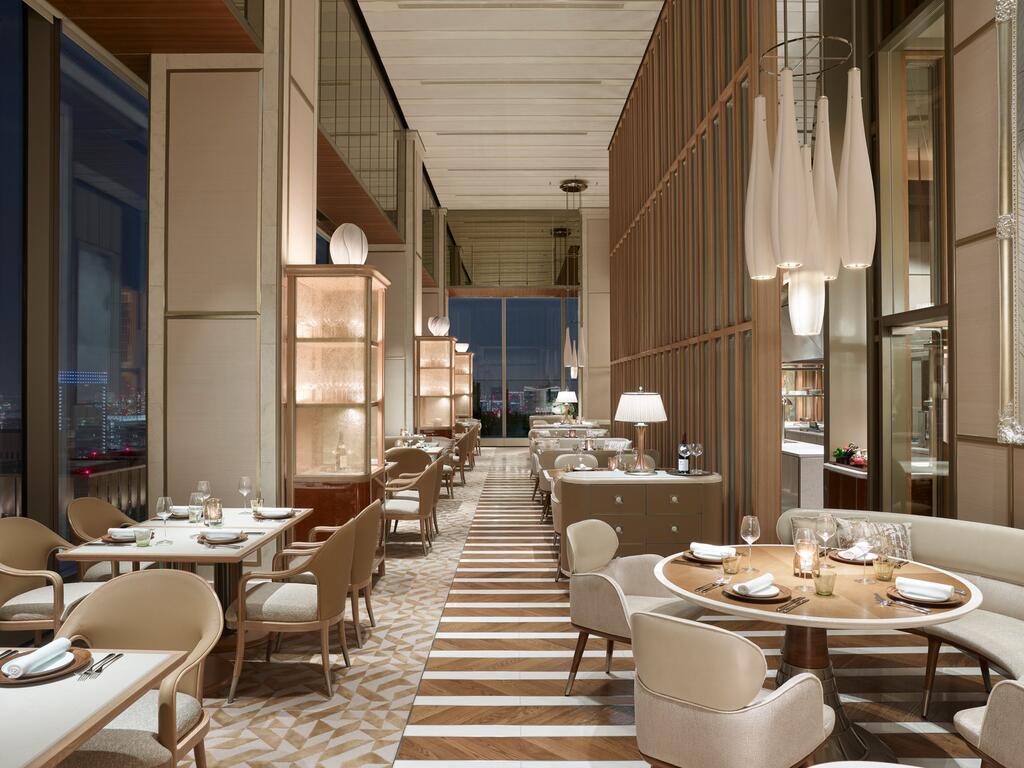
Movable furniture allows a single dining room to function as multiple venue types throughout the week—or even within the same day—without renovation or storage headaches. A restaurant can run a standard à la carte service at lunch, then reconfigure the same space into a banquet hall for a private event that evening, using the same furniture inventory.
Common format transitions include:
À la carte to banquet: Stackable chairs are cleared to the perimeter, and modular tables are joined into long banquet rows to accommodate larger seated groups.
Banquet to small gathering: Tables are separated back into individual units, and excess seating is stored, creating an intimate setting for smaller parties.
Indoor to outdoor: Lightweight, weather-resistant movable furniture can be relocated to patio or terrace areas during favorable weather, expanding seating capacity without permanent structural changes.
This adaptability reduces the need for restaurants to invest in separate furniture sets for each event type, lowering both upfront costs and ongoing storage requirements.
Restaurants should prioritize materials that balance aesthetics, durability, and ease of cleaning, since dining furniture faces frequent handling, spills, and heavy daily use. Furniture that looks elegant but scratches easily or is difficult to sanitize can become a liability rather than an asset.
Key material considerations include:
Durability: Frames made from powder-coated metal or engineered wood resist wear from constant repositioning and stacking.
Ease of cleaning: Non-porous surfaces and stain-resistant finishes support the frequent sanitation standards required in food service environments.
Weight-to-strength ratio: Materials should be light enough for staff to move quickly but sturdy enough to support guests safely.
Aesthetic consistency: Movable pieces should match the restaurant's design language so that flexibility doesn't come at the cost of ambiance.
Hospitality furniture manufacturers with experience supplying hotels and premium venues—such as Senyuan Furniture, which has produced furniture for properties like Park Hyatt Kyoto, Atlantis The Royal, and Regent Hong Kong—often engineer movable furniture lines specifically to meet these commercial-grade durability and cleaning standards.
Space utilization affects restaurant revenue because every square foot of dining room space that sits empty or is mismatched to party size represents lost seating capacity during peak hours. Movable restaurant furniture maximizes the usable capacity of a fixed footprint by letting the same square footage serve more configurations throughout a single service period.
For example, a dining room with fixed six-top tables cannot efficiently seat a steady stream of two-person parties without leaving empty seats—seats that still count against total capacity but generate no revenue. Movable furniture eliminates this inefficiency by allowing real-time resizing based on actual demand.
Q: How quickly can staff reconfigure a dining room with movable furniture?
A: Depending on room size and event complexity, trained staff can typically reconfigure a dining room using movable furniture in 15 to 30 minutes, compared to hours needed to bring in or remove fixed furniture.
Q: Is movable restaurant furniture more expensive than fixed furniture?
A: Movable furniture can have a higher upfront cost per piece due to engineering for stacking and folding, but it often reduces total furniture spend over time by eliminating the need for separate furniture sets for different event types.
Q: Can movable restaurant furniture be used outdoors as well as indoors?
A: Yes, many movable furniture lines are designed with weather-resistant materials that allow the same pieces to be relocated between indoor dining rooms and outdoor patio spaces as needed.
Q: Does movable furniture compromise the look of a high-end restaurant?
A: Not when sourced from hospitality furniture manufacturers that design specifically for premium venues; well-engineered movable furniture matches the aesthetic quality of fixed furniture while adding functional flexibility.


